Saddle stitch binding is a book binding method where folded sheets of paper are nested inside one another and stapled along the center fold to form a finished booklet. Did you know the name comes from the saddle-shaped apparatus? The pages actually drape over during the stapling process, hence the name, saddle. Believe it or not, this is the most cost effective binding method in commercial printing today and you have almost certainly held something saddle stitched in your hands this week without even thinking about it.
If you have flipped through a magazine, a comic book, an event program, a product catalog, or a newsletter, you have seen saddle stitch binding in action.
In This Article
How Saddle Stitch Binding Actually Works
The process is mechanically simple, which is part of why it stays so affordable.
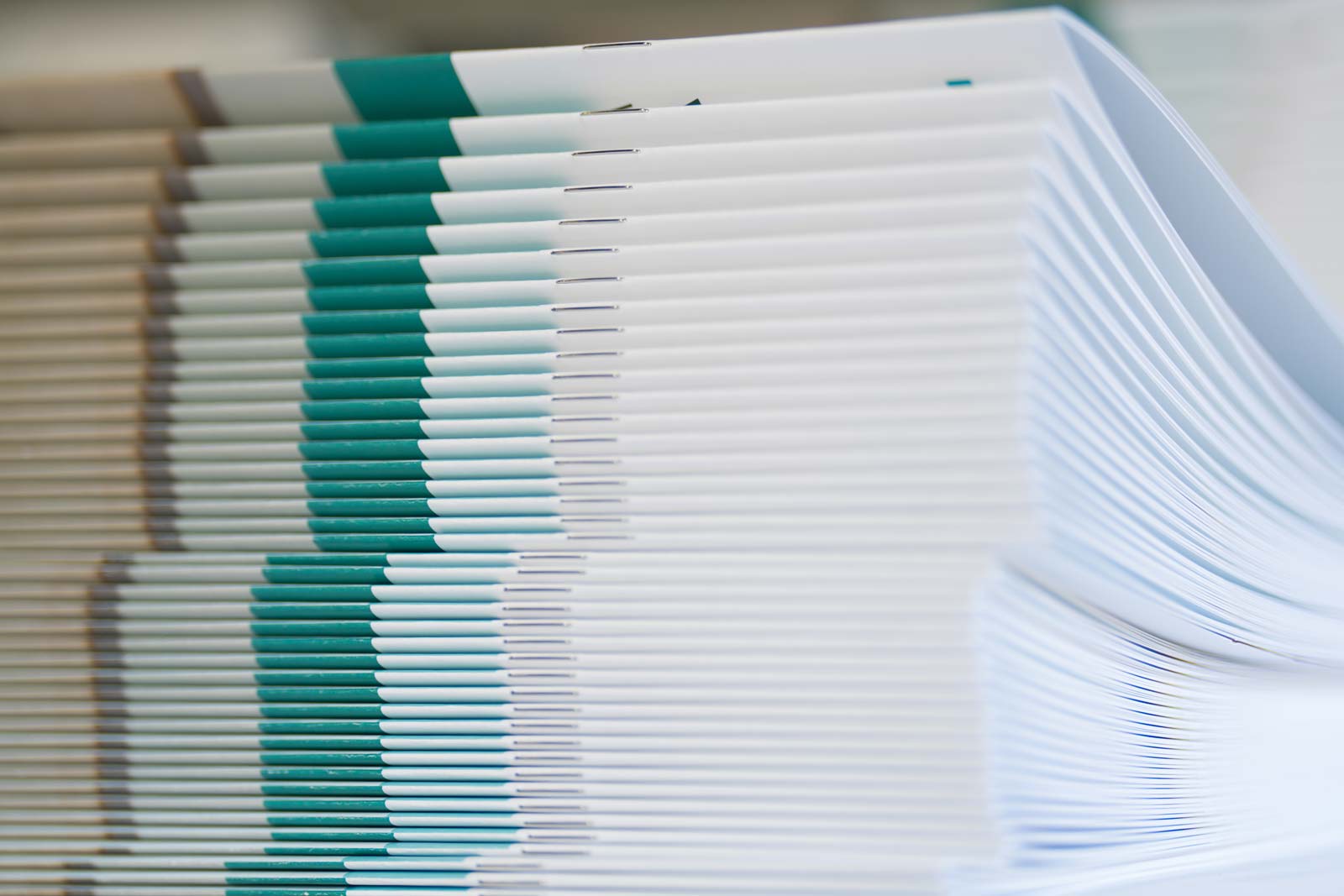
Sheets of paper are printed on both sides, with multiple pages laid out per sheet so they end up in the correct order once folded. Those sheets are then folded in half and nested one inside the next, like Russian dolls. The stack of folded sheets is draped over a saddle-shaped piece of equipment, with each side of the stack hanging over like the legs of a rider. Long wire staples are driven down through the fold line and closed on the inside, pulling the entire booklet together. The three open edges are then trimmed flush so the finished piece is even on all sides.
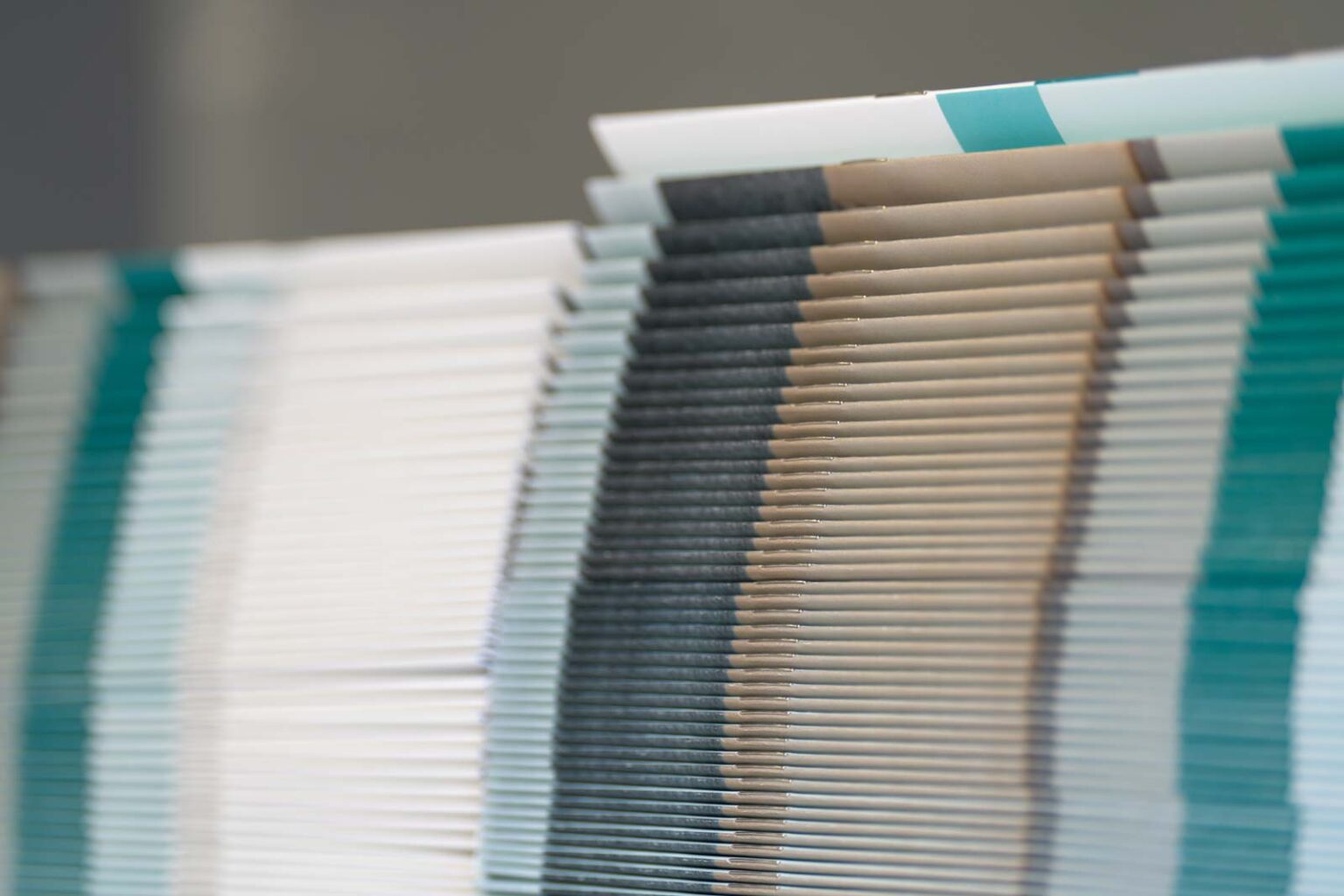
A standard booklet uses two staples down the spine (center). Larger formats sometimes need three or four. Small booklets can get by with a single staple, but every project and size is different. The staples almost always sit hidden inside the spine fold, so unless you open the booklet to the centerfold, you barely even notice them.
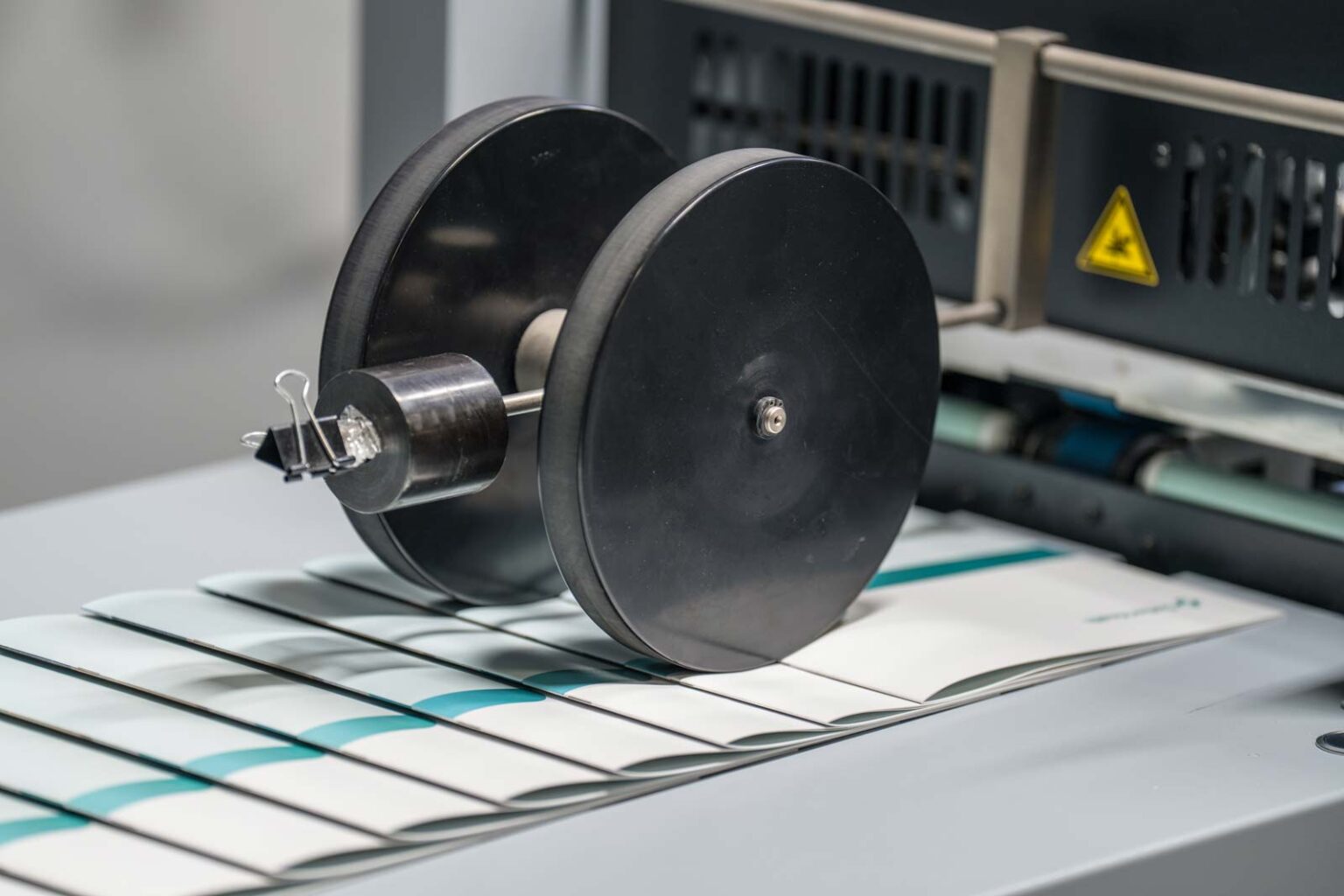
In a commercial setting, all of this happens inline on dedicated machines specifically for finishing. Sheets come off the press, get gathered into the right sequence, folded, stitched, and trimmed in one continuous flow. When it’s done right, the result is a booklet with a sharp spine, clean trim, and pages that lie flat when you open them to the middle.
Page Count Rules for Saddle Stitch Binding
This is the part most people get tripped up on, so it is worth slowing down for.
Saddle stitch booklets must have a page count that is a multiple of four. Eight pages, twelve pages, sixteen, twenty, twenty four, and so on. The main reason is structural. Each folded sheet of paper produces four pages of the finished booklet (front and back of each side of the fold), so adding one sheet adds four pages.
If you have a layout that ends up at, let’s say 14 pages, you have a few options:
- Add two pages of additional content to bring it up to 16
- Trim two pages of content to bring it down to 12
- Run two pages as blanks if the design calls for it
Most printers recommend a minimum of 8 pages and a maximum somewhere between 64 and 80 pages, depending on paper weight. Past that point, the staples can no longer hold the bulk securely and the inside pages start to “creep” outward, throwing off margins and trim.
For booklets pushing toward the upper end of that range, thinner text stock keeps the spine flat and the staples happy. Thicker covers (sometimes called a “plus cover”) give the finished piece a much more substantial feel without affecting how it binds together.
When to Use Saddle Stitch Binding
Saddle stitch is the right call when you want a professional booklet without the cost or production time of a glued or sewn binding.
We see clients use it for:
- Annual reports for nonprofits and foundations
- Membership newsletters for unions and associations
- Event programs for galas, conferences, and performances
- Product catalogs and look books
- Magazines and journals
- Donor impact reports
- Sales brochures and capabilities pieces
- School and museum guides
- Direct mail pieces with a multi page format
- Coloring books and activity books
- Trade show handouts and sell sheets folded into booklets
If your project is a flat one or two page piece, saddle stitch does not apply. That is just a folded brochure. Saddle stitch has to be a multi-page document or booklet that you want bound together.

Saddle Stitch vs Perfect Binding
This is the question that comes up on almost every booklet quote, so here is the short version.
Saddle Stitch
Uses staples at the center of the fold. Pages lie flat when open. Best for shorter page counts (8 to 80). Lower cost. Faster turnaround. Lighter weight for mailing.
Perfect Binding
Uses adhesive along the spine edge, with the cover wrapped around. Pages do not lie completely flat. Best for higher page counts (60 to 700+). Costs more. The flat spine can be printed with a title, which can matter for shelf placement.
A good rule of thumb: under 80 pages, saddle stitch is almost always the better choice on cost, turnaround, and design flexibility. Above 80 pages, or any time you need a printable spine for a book shelf, perfect binding is the way to go.
For a deeper comparison, our bindery services page walks you through every binding option we offer.
Pros and Cons of Saddle Stitch Binding
Pros
Lowest cost binding option. Fewer materials, faster equipment cycles, less labor. The savings show up immediately on quotes for booklets, programs, and catalogs.
Fast turnaround. Inline production means the booklet is bound, trimmed, and ready as it comes off the finishing line.
Lays flat when opened. Pages open fully to the centerfold, which is a real advantage for design layouts that span across two pages (sometimes called a “spread” or “crossover”).
Lightweight for mailing. Saddle stitched pieces add almost no extra weight beyond the paper itself, which keeps postage costs down on direct mail and member communications.
Versatile sizing. Works for everything from pocket sized booklets to large format programs in portrait, landscape, or square orientation.
Crossover artwork friendly. Photos and graphics can run cleanly across the centerfold without the gutter loss you get on perfect bound or hardcover books.
Cons
Page count limits. Once you push past 64 or 80 pages, the binding becomes structurally unreliable.
No printable spine. The folded spine cannot be printed on the way a perfect bound spine can.
Less durable than glued or sewn bindings. Saddle stitched booklets hold up well for normal handling, but they are not built for the long term shelf life of a hardcover textbook or reference work.
Page creep on thicker booklets. As page count climbs, the inner pages stick out slightly past the outer ones before trimming. A skilled printer compensates for this in prepress, but it is something to plan around if your design has tight margins or heavy bleed.
Saddle Stitch Binding at Bacchus Press
We have been producing saddle stitched booklets since 1975. Annual reports, member magazines, museum programs, donor newsletters, training booklets, sales catalogs, anything that calls for a polished, professional bound piece in the 8 to 80 page range.
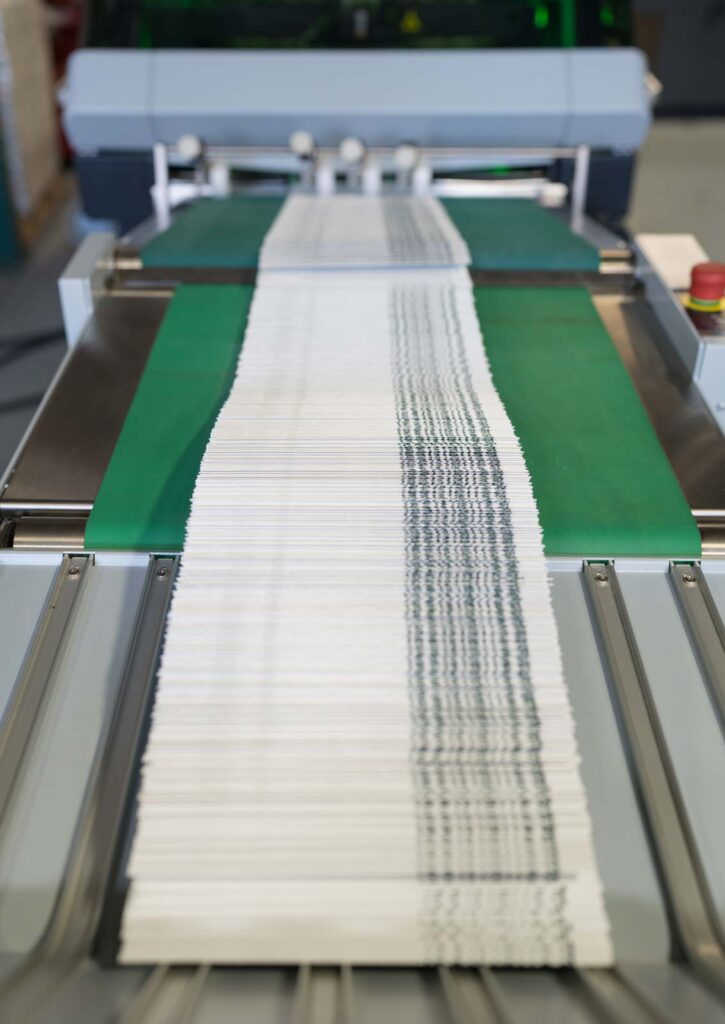
Everything happens in house at our Emeryville facility. Sheets come off our Heidelberg or Ricoh presses, run through inline folding and stitching, get trimmed flush, and ship the same way. There is no second vendor, no extra freight, no break in the chain. This is why we can hit deadlines faster than other shops, especially for unions and nonprofits running tight production schedules around mailing dates, board meetings, and event launches.
We are also a union shop and hold active FSC Chain of Custody certification (FSC-C125400). Every saddle stitched booklet we produce can carry the FSC label, printed on certified or post consumer recycled paper with soy and vegetable based inks. For nonprofits, unions, and mission driven organizations that have to back up sustainability claims with documentation, that matters.
When you bring a booklet project to us, you get one team handling the whole process: design check, prepress, printing, bindery, and direct mail.
Frequently Asked Questions About Saddle Stitch Binding
What is saddle stitch binding?
Saddle stitch binding is a book binding method where folded sheets of paper are nested together and stapled along the center fold to create a finished booklet. The pages, including the cover, must come out to a multiple of four. It is the most common and most affordable binding method for booklets, magazines, and brochures up to about 80 pages.
Why is it called saddle stitch?
The name comes from the saddle shaped apparatus the folded pages drape over during the stitching process, with each side hanging down like the legs of a rider in a saddle. “Stitch” is the printing industry term for stapling, even though the staples are formed from a continuous spool of wire rather than pre cut.
What is the maximum page count for saddle stitch binding?
Most printers cap saddle stitch at 64 to 80 pages, depending on paper weight. Lighter text stocks allow higher page counts, while heavier stocks max out sooner. Past that point, the staples cannot hold the bulk securely and inner pages start creeping out past the trim. For projects above 80 pages, perfect binding is the better choice.
Why does saddle stitch binding require a multiple of four pages?
Each folded sheet of paper produces four pages of the finished booklet (front and back on each side of the fold). Adding or removing a sheet changes the page count by four, not one or two, so the total page count has to land on a multiple of four for the binding to work.
Is saddle stitch binding the same as stapling?
Functionally, yes. The wire fed through the spine forms staples that hold the pages together. The difference is that saddle stitching is done on specialized equipment that feeds wire from a continuous spool and clinches it inside the fold, all inline with the rest of the production process. The result is cleaner and far more durable than what an office stapler produces.
What is the difference between saddle stitch and perfect binding?
Saddle stitch uses staples through a center fold and lies flat when opened. Perfect binding uses adhesive along a flat spine and is used for thicker books. Saddle stitch is faster and cheaper for shorter page counts. Perfect binding is the standard for books over 80 pages and any project that needs a printable spine.
Can saddle stitched booklets be FSC certified?
Yes. When produced by an FSC certified printer using certified paper, the finished booklet can carry the FSC label. Bacchus Press holds active FSC Chain of Custody certification across all of our printing and bindery services.
How long does it take to produce a saddle stitched booklet?
Standard turnaround on a saddle stitched booklet at our facility is 5 to 10 business days from final approved files, depending on quantity, paper, and finishing. Rush turnaround is available on most projects when the schedule calls for it.
What sizes work for saddle stitch binding?
Almost any size works, from pocket sized booklets up to oversized programs and catalogs. Common finished sizes include 5.5″ x 8.5″, 6″ x 9″, 8.5″ x 11″, and 9″ x 12″. Square and landscape formats are also straightforward. The flat sheet has to be twice the width of the finished piece to allow for the fold.
Need a Saddle Stitched Booklet Done Right?
Bacchus Press has been producing saddle stitched booklets, magazines, programs, and catalogs for nonprofits, unions, museums, and businesses since 1975. FSC certified, union staffed, and produced entirely in house at our Emeryville facility. Get in touch to discuss your project.


